Download (PDF, ePub, Mobi) Incomparable Empires: Modernism And The Translation Of Spanish And American Literature (Modernist Latitudes) Ebook Read Online
Incomparable Empires: Modernism And The Translation Of Spanish And American Literature (Modernist Latitudes)
Download or read Incomparable Empires: Modernism And The Translation Of Spanish And American Literature (Modernist Latitudes) eBook in pdf, epub, kindle, word, txt, ppt, Mobi, rar and zip format. There is no limit to the number of books you can download. Incomparable Empires: Modernism And The Translation Of Spanish And American Literature (Modernist Latitudes) looks good in design, features and function. The most effective function of this product is really simple to scrub and control. The planning and layout are very fantastic which render it really appealing and beauty. Lots of individuals feel attracted to purchase and utilize it. Every feature is developed to fulfill people require as its function too. It's stunning and ideal product for convenient setup, upkeep, and control device..

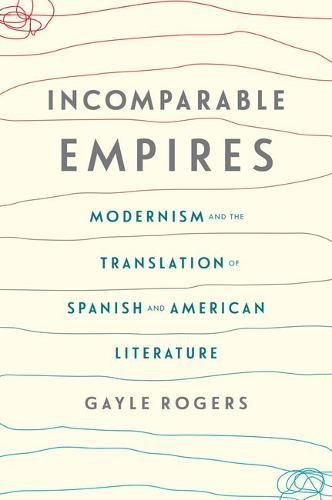
Features Incomparable Empires: Modernism And The Translation Of Spanish And American Literature (Modernist Latitudes)
Honestly, the merchandise is very smart function, healthy and safety for users. Incomparable Empires: Modernism and the Translation of Spanish and American Literature (Modernist Latitudes) can be quite helpful to finish all user requires. The design and style is very light, appealing and chic one. With the most up-to-date innovation, this supplement can meet all individuals expectation with fantastic function and function. You can actually pay for the dedicated vendor. Individuals could possibly get and have it online on the web by this site. The owner is very helpful serve and send out the product punctually shipment. It is very exceptional service for the good quality product. One characteristic to consider about this system that there's nobody felt trouble and dissatisfied with it. It works perfectly since the ads said previously.
Descriptions Incomparable Empires: Modernism And The Translation Of Spanish And American Literature (Modernist Latitudes)
Re-decorating key factor to contemplate, as consumer self-confidence in some companies over others dictates more and more of many are purchased and utilized on satisfaction. Surely you will acquire more security buying from one of those popular suppliers.After you have done all of the search, there is certainly the last thing to check out along with perhaps use to perform your selection process. Suppose you've narrowed your choice into 3 products , but they are uncertain selecting the want you to buy.
The Spanish-American War of 1898 seems to mark a turning point in both geopolitical and literary histories. The victorious American empire ascended and began its cultural domination of the globe in the twentieth century, while the once-mighty Spanish empire declined and became a minor state in the world republic of letters. But what if this narrative relies on several faulty assumptions, and what if key modernist figures in both America and Spain radically rewrote these histories at a foundational moment of modern literary studies?
Following networks of American and Spanish writers, translators, and movements, Gayle Rogers uncovers the arguments that forged the politics and aesthetics of modernism. He revisits the role of empire―from its institutions to its cognitive effects―in shaping a nation's literature and culture. Ranging from universities to comparative practices, from Ezra Pound's failed ambitions as a Hispanist to Juan Ramón Jiménez's multilingual maps of modernismo, Rogers illuminates modernists' profound engagements with the formative dynamics of exceptionalist American and Spanish literary studies. He reads the provocative, often counterintuitive arguments of John Dos Passos, who held that "American literature" could only flourish if the expanding U.S. empire collapsed like Spain's did. And he also details both a controversial theorization of a Harlem–Havana–Madrid nexus for black modernist writing and Ernest Hemingway's unorthodox development of a version of cubist Spanglish in For Whom the Bell Tolls. Bringing together revisionary literary historiography and rich textual analyses, Rogers offers a striking account of why foreign literatures mattered so much to two dramatically changing countries at a pivotal moment in history.
Following networks of American and Spanish writers, translators, and movements, Gayle Rogers uncovers the arguments that forged the politics and aesthetics of modernism. He revisits the role of empire―from its institutions to its cognitive effects―in shaping a nation's literature and culture. Ranging from universities to comparative practices, from Ezra Pound's failed ambitions as a Hispanist to Juan Ramón Jiménez's multilingual maps of modernismo, Rogers illuminates modernists' profound engagements with the formative dynamics of exceptionalist American and Spanish literary studies. He reads the provocative, often counterintuitive arguments of John Dos Passos, who held that "American literature" could only flourish if the expanding U.S. empire collapsed like Spain's did. And he also details both a controversial theorization of a Harlem–Havana–Madrid nexus for black modernist writing and Ernest Hemingway's unorthodox development of a version of cubist Spanglish in For Whom the Bell Tolls. Bringing together revisionary literary historiography and rich textual analyses, Rogers offers a striking account of why foreign literatures mattered so much to two dramatically changing countries at a pivotal moment in history.
Comments
Post a Comment